What This Article Covers
- Why industrial telemetry, mine plans, and process recipes are among the most valuable — and most exposed — data your organisation holds
- The specific ways public cloud AI tools create data leakage risk for operational environments
- What an isolated, on-premises AI deployment actually looks like in practice, and how it changes day-to-day operations
- The real cost to build and run an isolated AI environment: hardware, software, team, and timeline
- A plain-language framework for deciding whether isolation is the right call for your operation
The intelligence embedded in your operational data — the telemetry signatures of your equipment, the optimised ratios in your processing plant, the geometry of your ore body — took years and tens of millions of dollars to generate. Sending it to a public AI service to get a maintenance recommendation trades that intelligence for a convenience that your competitors can buy for $20 a month.
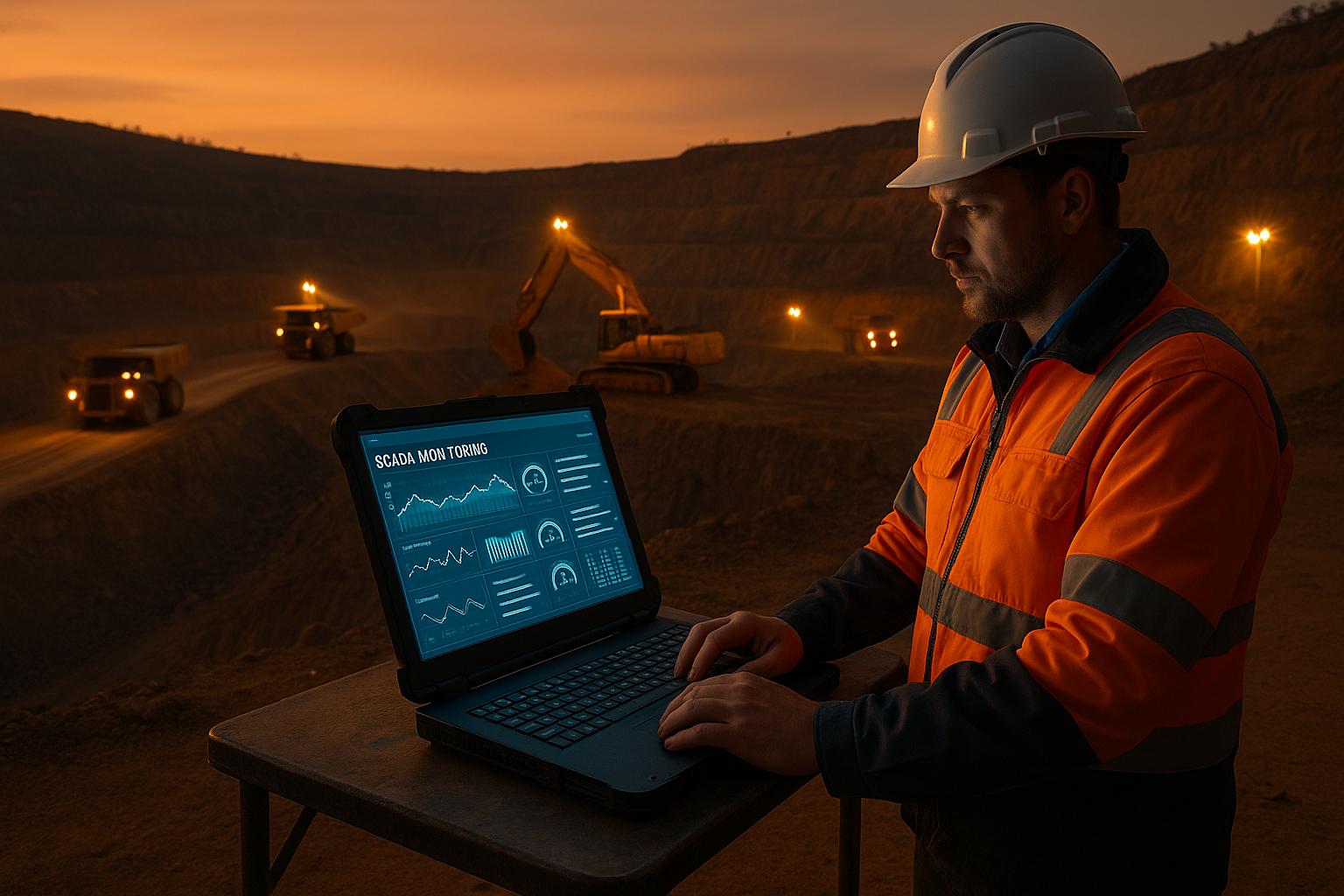
I'll address this upfront: most of the AI risk conversation in mining and energy focuses on cybersecurity — ransomware, SCADA attacks, network breaches. Those are real and serious. But there's a quieter risk that gets far less attention. It's the risk of operational intelligence leaving the site perimeter through entirely legitimate, authorised means. An operations engineer pasting a process flowsheet into a cloud AI assistant to troubleshoot a recovery problem. A maintenance planner exporting vibration data from the historian and uploading it to an AI analytics platform. A planning engineer using a public AI tool to query blast pattern geometry from the mine plan PDF.
None of these actions feel like a security incident. Each one of them is exactly that.
This article covers why isolation matters for mining, energy, and critical infrastructure operations, what it actually costs to build an isolated AI environment, and how to decide whether your operation needs it.
1. Is This Right for Your Operation?
Not every mining or energy operation needs a fully isolated AI environment. The correct answer depends on the nature of your data and what it would cost a competitor — or a regulator — to obtain it. Here's how to read your situation.
This approach works well if your operation:
- Operates SCADA systems, distributed control systems, or industrial sensor networks with 12 or more months of operational history
- Has proprietary process recipes, reagent formulations, or ore body models that represent years of optimisation and trial investment
- Falls under critical infrastructure protection legislation — such as Australia's SOCI Act, the US CISA framework, or equivalent national requirements
- Operates in a jurisdiction where local data residency laws apply to operational or environmental data
- Has experienced at least one instance of a competitor appearing to know your operational cost position, equipment configuration, or production rates with unusual accuracy
Walk away from full isolation if:
- Your operational data is already publicly reported — production volumes, ore grades, and cost figures that appear in quarterly investor reports carry no isolation premium
- You have fewer than three connected industrial control systems — the infrastructure cost of isolation exceeds the benefit below this threshold
- Your IT and OT teams do not have a working relationship — isolated AI requires tight integration between the two functions; if that relationship doesn't exist, the project will stall before it delivers anything
- Your operation is in care-and-maintenance mode or near end of mine life — the payback period won't close in time
2. What Changes Day-to-Day
Before: How Operational Data Leaks Through Normal AI Use
Here's what typical operational AI use looks like before any isolation policy is in place. The maintenance planner for a crushing circuit exports 90 days of bearing temperature and vibration data from the plant historian into a CSV, then uploads it to a cloud-based AI maintenance platform for analysis. The platform processes it on shared infrastructure and returns a predictive maintenance recommendation. The data — including equipment serial numbers, operating parameters, and throughput rates — now lives on a third-party server under that vendor's data retention policy.
The process engineer who suspects a reagent ratio is sub-optimal pastes the flotation circuit parameters — including proprietary collector and frother quantities specific to your ore type — into a public AI assistant to get troubleshooting suggestions. Those parameters, which took $3–5M in metallurgical trials to optimise, are now in a model's training corpus.
Neither action looks like a security incident on the day it happens. Both represent permanent transfer of competitive intelligence.
After: AI That Knows Your Operation Without Leaving It
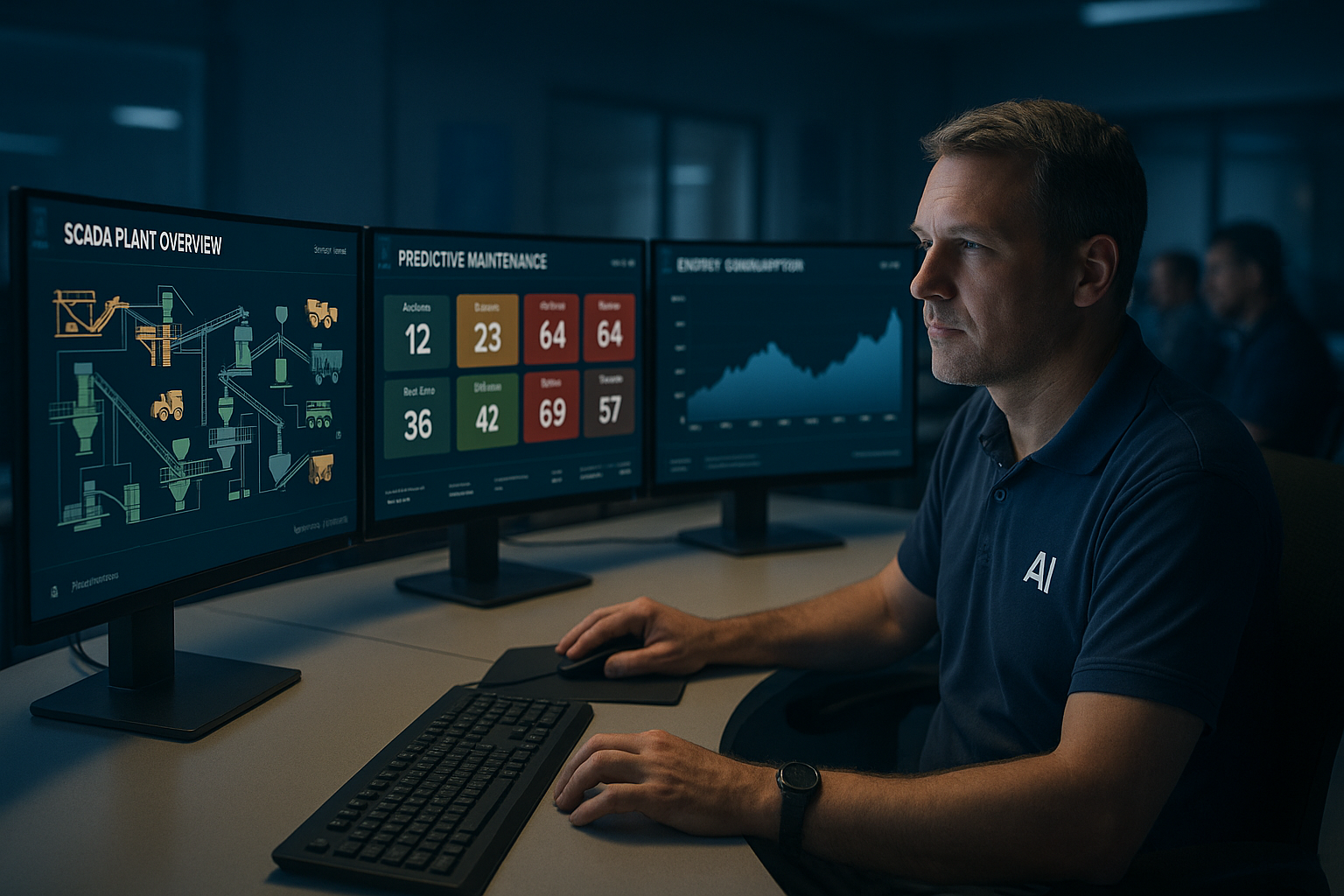
With an isolated AI environment, the same analysis runs entirely within the site perimeter. The data historian feeds directly into an on-premises AI processing layer. The models are trained on your specific equipment signatures — they know the difference between the normal vibration profile of Crusher 3 after a liner change and a developing bearing fault, because they have 18 months of your data, not generic training data. The process engineer still gets troubleshooting recommendations. But the prompt, the context, and the response never leave the operational network.
The shift in mindset is from "AI as a cloud service I subscribe to" to "AI as operational infrastructure I own." It costs more to build. It pays back differently — through protecting intelligence you already own, not productivity you're trying to gain.
3. The Business Case
The number that surprises most operations directors isn't the cost of an isolated AI system. It's the cost of not having one.
IBM's 2024 Cost of a Data Breach report puts the average cost of a breach in the industrial and energy sector at $4.3 million. That figure covers direct incident response, regulatory penalties, legal exposure, and the cost of notifying affected parties. What it doesn't capture is the competitive intelligence loss — the scenario where your ore body geometry, your process recipe, or your production scheduling logic ends up in a competitor's hands through a data exposure you can't trace and can't prove.
A mine plan representing a confirmed mineral resource of 50 million tonnes has a competitive intelligence value that exceeds its data breach classification. A competitor with access to your grade distribution and mining sequence can model your production costs within 5–8% accuracy. That information changes how they price contracts, how they staff their operations, and how they position in a tendering process.
The business case for isolated AI runs in both directions: the cost of building the isolated environment versus the expected value of preventing an intelligence loss event. For most operations with significant proprietary process data or resource models, that calculation closes comfortably within two years.
Operational Intelligence Protection ROI Calculator
Adjust the sliders to match your operation. Results update in real time.
Assumes 85% reduction in external data exposures after isolated AI deployment. Excludes competitive intelligence value loss, which varies by site and is not captured in incident cost. Project cost calculated at $85,000 base plus $800 per connected asset. Annual infrastructure running cost: $35,000.
Operational Data Exposure Events Per Quarter — Pre and Post Isolation
Q1–Q4 2025: baseline using public cloud AI tools. Q1–Q4 2026: post-isolation deployment. Q1 2026 shows residual events during the transition period as legacy tools are retired.
4. How the System Works
An isolated AI environment for mining or energy operations is architecturally straightforward. The complexity is in the integration, not in the concept. Here is what the data flow looks like end to end.
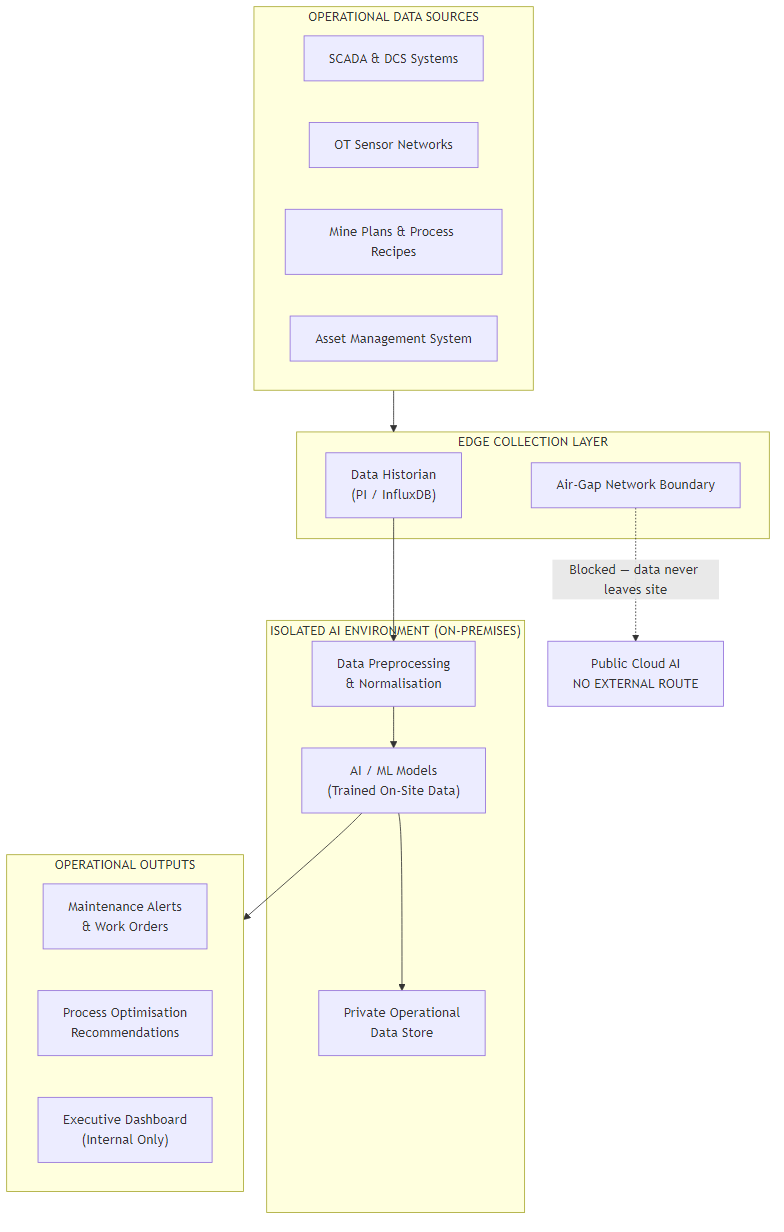
- Operational data is collected at the source. Industrial control systems — SCADA platforms, distributed control systems, programmable logic controllers — continuously generate sensor readings, equipment states, and process parameters. Asset management systems hold maintenance history, part replacements, and failure records.
- A data historian aggregates it within the operational network. Platforms such as OSIsoft PI (now AVEVA PI), InfluxDB, or Wonderware act as the single data repository for time-series operational data. This step typically already exists at any site with mature instrumentation.
- An air-gap boundary enforces the perimeter. This is a network-level control — typically a unidirectional data diode or a firewall with no outbound rules to external AI services. Data flows in one direction: from the operational network to the AI processing layer. Nothing flows out.
- On-premises AI models process the data. These are the same kinds of models that cloud AI services use — machine learning models for anomaly detection, pattern recognition, and predictive analysis. The difference is that they run on hardware within your operational environment and are trained on your specific site data, not generic industry data.
- A private operational data store retains the results. Predictions, alerts, and recommendations are written to an internal database. Nothing in this store is accessible from outside the operational network.
- Outputs reach operations teams through internal systems. Maintenance alerts route through your existing maintenance management system (IBM Maximo, SAP PM, or equivalent). Process recommendations surface through the operator console. Executive dashboards are hosted on internal infrastructure, accessible only on the corporate network.
5. How the Isolation Actually Works
I'll use a plain-language analogy here because the technical terminology gets in the way of the decision. Asking a public AI assistant about your mine plan or your process recipe is like discussing your resource model in a hotel lobby. The conversation is technically private. Until it isn't — and when it isn't, you don't get a notification, you don't know who was listening, and you can't take the information back.
Public AI services — including the frontier AI assistants, cloud analytics platforms, and vendor-specific AI tools that most operations teams encounter — operate on shared infrastructure. When you send data to them, that data is processed on hardware you don't control, under data handling policies that your legal team has typically not reviewed, in jurisdictions that may not align with your regulatory obligations.
There are three practical approaches to isolation, ranging from absolute to conditional:
- Full air-gap (hardest, most secure): The AI processing environment has zero physical or logical connection to any external network. Data enters via deliberate, audited transfer only. This is appropriate for defence-adjacent operations, certain critical infrastructure contexts, and operations where even the metadata of data movement would be sensitive.
- Private cloud with data sovereignty controls (most common): AI processing runs in a dedicated cloud environment — typically a virtual private cloud hosted within a specific jurisdiction — with contractual and technical controls preventing data from being used to train shared models or transmitted externally. Azure Government, AWS GovCloud, or a dedicated Azure landing zone configured with private endpoints are typical implementations.
- On-premises with firewall isolation (most practical for most sites): AI processing hardware sits within the site's operational network. Standard firewall rules prevent any outbound connection to public AI services. This is the configuration described in the architecture above, and it is the right starting point for most mining and energy operations.
The Key Distinction: Where Does the Model Learn?
The risk isn't only in the data you send today. Public AI services that retain your operational data may use it to improve their models — models that your competitors then query. An isolated AI model learns from your data and shares that knowledge with nobody. That's the difference between an operational capability and a competitive liability.
6. What It Costs
Here's what I've seen derail otherwise sound projects: the capital cost estimate that doesn't include the ongoing infrastructure cost, or the ongoing cost estimate that doesn't include the integration work. I'll address both separately.
Running Costs (Annual)
| Cost Category | Annual Cost Range | Notes |
|---|---|---|
| On-premises server hardware (lease or depreciation) | $26,000–$58,000 | 8–16 vCPUs, 64–128GB RAM, GPU optional for larger sites |
| AI software licences and model management tools | $18,000–$42,000 | Depends on vendor; open-source components reduce this significantly |
| Data historian licencing (if not already in place) | $12,000–$28,000 | Typically already exists at instrumented sites |
| Maintenance and monitoring (internal or managed) | $24,000–$48,000 | Part-time data engineer or managed service contract |
| Total annual running cost | $80,000–$176,000 | Lower end: well-instrumented site with existing historian; upper end: greenfield integration |
One-Time Project Costs
| Project Phase | Cost Range | Duration |
|---|---|---|
| Data discovery and scoping | $25,000–$45,000 | 4–6 weeks |
| Architecture design and security review | $35,000–$55,000 | 3–4 weeks |
| Data integration and historian connection | $45,000–$80,000 | 8–12 weeks |
| AI model training and validation | $20,000–$45,000 | 4–6 weeks |
| Pilot deployment and tuning | $15,000–$30,000 | 4–6 weeks |
| Total project cost | $140,000–$255,000 | 6–9 months to first production insights |
The Number That Surprises Most CFOs
The one-time project cost gets approved. The $80,000–$176,000 annual running cost gets questioned at the next budget cycle when it wasn't in the original business case. Budget for both from the start. The infrastructure cost is non-negotiable — on-premises AI is not a "set and forget" deployment; it requires ongoing maintenance, model updates, and infrastructure management that cloud AI services handle invisibly but that you must handle explicitly.
Where Your Operational Security Overhead Currently Goes (Public Cloud AI)
The red slice — reactive incident response — is the target. Isolated AI shifts spend from reactive breach management to proactive infrastructure investment.
7. What Your Team Needs
Be sceptical of any vendor quoting a 6-week deployment timeline. An isolated AI environment that is genuinely secure and genuinely useful requires people your vendor cannot supply: someone inside your organisation who understands both the operational technology environment and the AI system well enough to be the bridge between them.
Internal Roles Required
- OT/IT liaison (critical): The single most important role. This person understands both the operational network (SCADA, historians, PLCs) and the IT infrastructure. Without them, integration stalls and security gaps appear that neither the OT team nor the IT team owns.
- Operations champion: A production manager or maintenance superintendent who understands the operational problem well enough to validate whether the AI is providing useful insights. Their sign-off on model output quality is what moves the project from pilot to production.
- Data engineer (part-time, at minimum): Responsible for the data pipeline from historian to AI processing layer. This can be a contractor role for the initial build, transitioning to a shared internal resource for ongoing maintenance.
- Information security sign-off: The isolation architecture must be reviewed and approved by your information security function. They will need to validate that the air-gap controls are effective and that the system complies with your SOCI Act obligations or equivalent critical infrastructure requirements.
Build vs. Buy
In practice, the right answer for most sites is a hybrid: buy the AI platform and the integration framework from a vendor who specialises in industrial AI, but retain ownership of the architecture, the data, and the security controls. Vendors who insist on managing the security layer or who require outbound connectivity for "model updates" should be treated with caution. The value of isolation is destroyed the moment a well-intentioned vendor update requires your data to leave the site.
Implementation Timeline
| Phase | Duration | Key Activities | Who Owns It |
|---|---|---|---|
| 1. Data Discovery | 4–6 weeks | Audit which operational data systems exist, assess data quality, identify what moves to cloud today | OT/IT liaison + external assessor |
| 2. Architecture Design | 3–4 weeks | Design network segmentation, select AI platform, define air-gap controls | IT security + OT/IT liaison |
| 3. Integration Build | 8–12 weeks | Connect historian to AI layer, build data pipeline, configure firewall rules | Data engineer + vendor |
| 4. Model Training | 4–6 weeks | Train AI models on historical site data, validate against known outcomes | Vendor + operations champion |
| 5. Pilot Deployment | 4–6 weeks | Live pilot on one asset class, operations champion validates output quality | Operations champion + data engineer |
| 6. Full Deployment | 4–8 weeks | Expand to full asset base, integrate with maintenance management system, staff training | Operations + IT + vendor |
8. How You Know It's Working
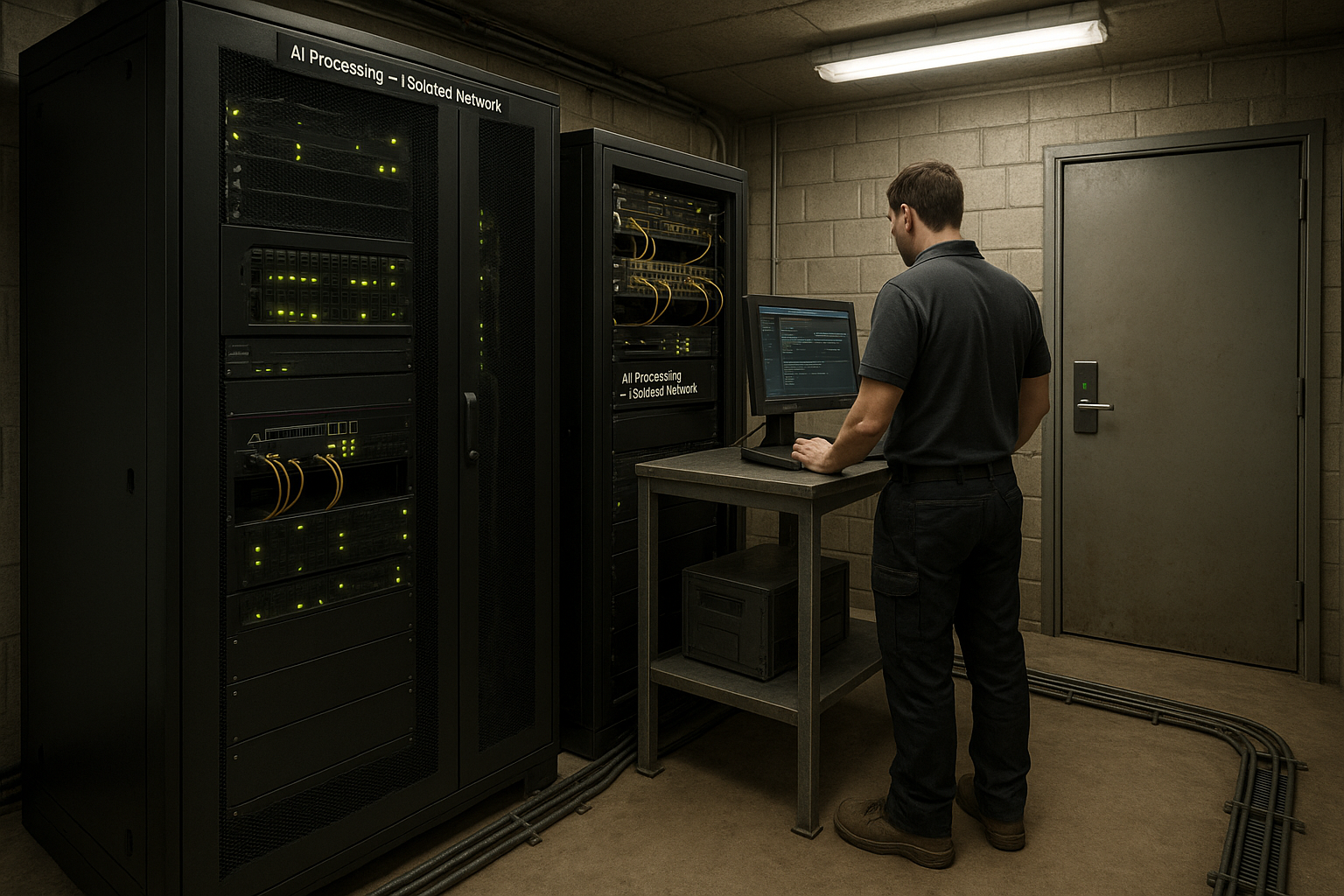
An isolated AI environment has two separate performance dimensions: security performance (is the isolation holding?) and operational performance (is the AI generating useful insights?). You need metrics for both. A system that is perfectly isolated but generating inaccurate predictions is not a success; neither is a system that generates brilliant insights while leaking data through a misconfigured firewall rule.
| Metric | What It Measures | 12-Month Target |
|---|---|---|
| External data transmission events from OT network | Security: is operational data leaving the perimeter? | Zero events (verified monthly by security audit) |
| AI model prediction accuracy | Operational: is the AI generating reliable outputs? | ≥87% accuracy on known historical outcomes, improving quarterly |
| Alert-to-work-order conversion rate | Operational: are maintenance teams acting on AI alerts? | ≥70% of AI-generated alerts result in a work order |
| Unauthorised cloud AI tool usage by staff | Security: are staff bypassing the isolated environment? | Zero reported incidents; staff survey compliance ≥90% |
| Model drift score (monthly) | Operational: is the model degrading as equipment ages or processes change? | Drift score below 0.15; retraining triggered when exceeded |
9. Where to Start
The five actions below are the ones I'd prioritise in order. They are specific, not generic — each one produces a tangible output that either justifies the next step or tells you to stop.
- Commission a data audit of current outbound AI usage. Spend four weeks cataloguing where operational data is currently going to external AI services. Most operations find three to seven different tools in active use that nobody has formally approved. This audit is the foundation for everything that follows — you cannot isolate what you haven't mapped.
- Classify your operational data by competitive sensitivity. Not all operational data needs the same level of protection. Grade it: public (production volumes in investor reports), internal (equipment maintenance history), confidential (process recipes, reagent ratios), and critical (ore body models, blast designs). The isolation architecture should match the classification, not apply maximum security to everything.
- Identify your OT/IT liaison internally before briefing any vendor. This role cannot be outsourced. Find the person inside your organisation who understands both the operational technology environment and the IT infrastructure. Brief vendors only after you have this person engaged — they will ask the questions that prevent a multi-year regret.
- Run a single-system pilot before committing to full deployment. Pick one asset class — a fleet of haul trucks, a single processing circuit, or one energy metering zone — and run a contained pilot of the isolated AI concept. Prove that the data pipeline works, the model generates useful output, and the air-gap holds. Budget $35,000–$55,000 for this pilot phase as a standalone expenditure before committing to the full project.
- Brief your information security function and legal counsel before signing any vendor contract. The SOCI Act in Australia (and equivalent legislation in other jurisdictions) creates specific obligations around critical infrastructure AI systems. Vendor contracts that include data handling terms, model training clauses, or outbound connectivity requirements need legal review against those obligations before you sign.
Key Takeaways
Decision Framework for Operational AI Isolation
- Is the opportunity real? If your operation holds SCADA data, process recipes, or resource models with competitive intelligence value, the answer is yes. Use the ROI calculator above to size the exposure.
- Is the cost justified? $140,000–$255,000 to build, $80,000–$176,000 per year to run. If your annual data exposure risk exceeds $500,000, the business case closes within 18–24 months on expected value alone.
- What matters most in execution? The OT/IT liaison role is the single most important success factor. Get that person identified before briefing vendors.
- What should you be sceptical of? Any vendor who tells you their isolated AI solution requires outbound connectivity for model updates or telemetry. That's not isolation. That's isolation theatre.
- When should you walk away? If your operation is near end of life, your data is already publicly reported, or your OT and IT teams have no working relationship. Fix the team problem first — technology can't bridge a governance gap.
Want Practical Insights on AI in Operations?
I write about applying AI to real business problems — with honest numbers and no vendor speak. Subscribe for articles delivered twice a month.
Subscribe to Newsletter →